PhD Research
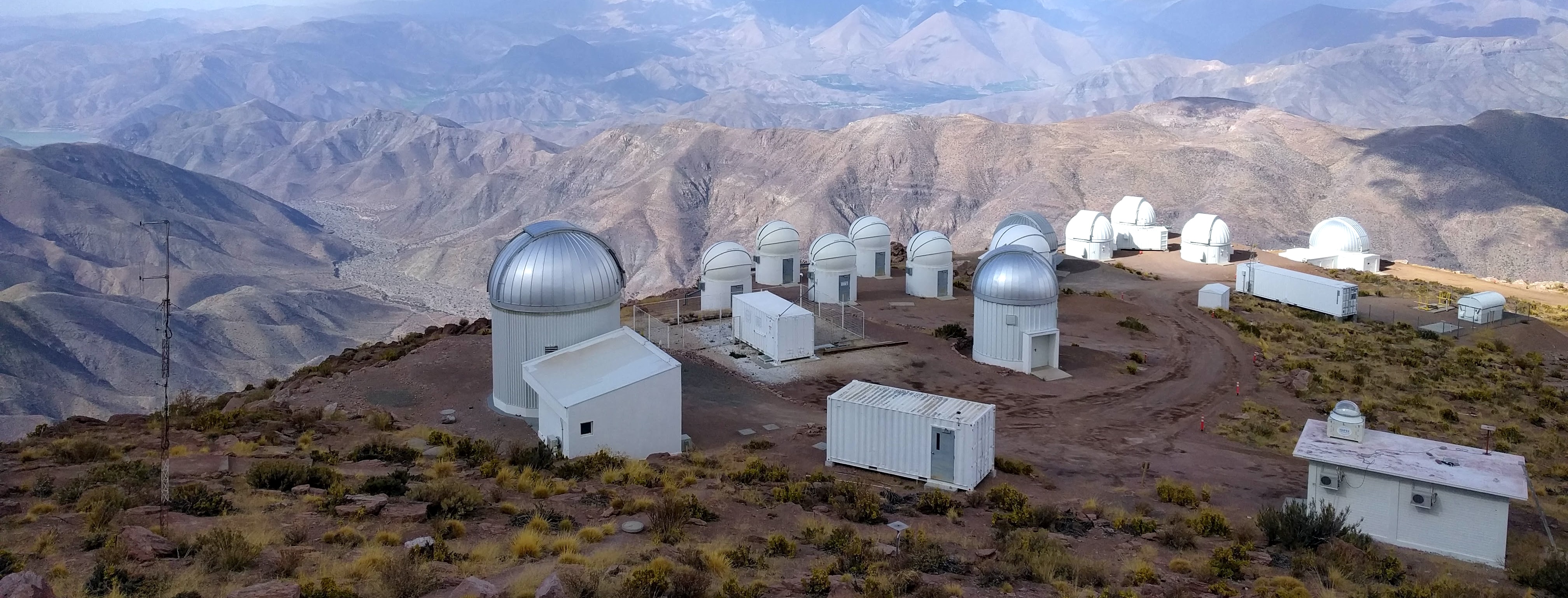
I earned my PhD in Physics from the University of Michigan in 2019 under the supervision of Dr. David Gerdes. My graduate research focused on repurposing data from the Dark Energy Survey (DES), an astronomical survey conducted from Chile that was designed to study galaxies and galaxies clusters across billions of light-years. However, its repeated observations of the same areas of sky enabled discovery, tracking, and analysis of asteroids and comets in the distant Kuiper Belt region of the Solar System beyond Neptune!
Research Highlights
| Discovery & Characterization of Dwarf Planet “DeeDee” (2014 UZ224) | Involved in discovery of a candidate dwarf planet at 92 astronomical units from the Sun (2.5 times farther than Pluto). I led follow-up thermal infrared observations using the ALMA Observatory in Chile to constrain its size and surface reflectivity. DeeDee is about 640km in diameter (about the size of Oregon) and reflects about 13% of the light that hits it (like asphalt or a dark roof). Paper: ApJL (2017) |
| Testing “Planet Nine” & Survey Biases | Is the unexpected orbital clustering of extreme TNOs proof of Planet Nine, or just observing bias? I built a DES Survey Simulator to systematically model where and how DES observed. We studied whether the observed orbital clustering among Extreme Trans-Neptunian Objects (ETNOs) was a true physical signal from a distant planet or an artifact of observing bias—in short, we mostly find objects where we’re looking! Papers: PSJ (2020) | AJ (2018) | AJ (2017) |
| Other Outer Solar System Research | I used the survey simulator and DES data to characterize some wonderfully weird objects, including 2015 BP519 (“Caju”), an extreme TNO with a 54° orbital inclination, and the first confirmed ultra-red Neptune Trojan. I also contributed to ground-based target search efforts for NASA’s New Horizons mission. Papers: AJ (2018) - Caju | Icarus (2018) - Trojans |
View my publications at the following links!